2/2
2/2
ÉcoNoble – Socio-economic history of nobility at court (France, 17th-18th century)
Duration: 2027-...
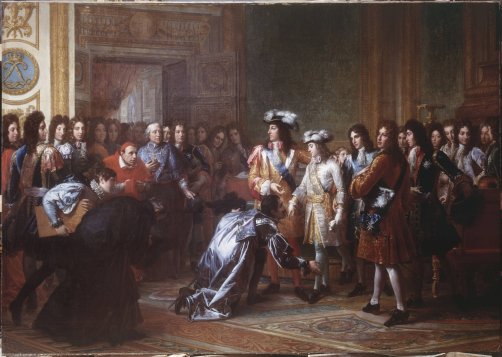
ÉcoNoble proposes to reexamine the history of the court through the lens of its participants, adopting an approach that has rarely been applied to them thus far: that of economic and social history. Drawing on primary sources, the aim will be to examine the courtly context in order to define it and assess its impact on the fortunes of those who frequented the sovereign and his residences, from the mid-17th century to the early years of the Revolution. The working hypothesis, which will be tested, is that of enrichment fostered by the courtly context and an interdependence between the Crown and the courtiers. Ultimately, the question of the flourishing of the elites, in contact with power, will be raised. This research focus is part of the programme “Networks and sociability at the court of France, 17th-18th century” of the Centre de recherche du château de Versailles, in dialogue with the prosopographic focus “PERCOUR - Persons, Offices and Networks at the French Court”, coordinated by Benjamin Ringot. It will begin in 2027, following a preparatory year in 2026.
The ÉcoNoble project aims to measure not only the costs but also the actual benefits of the court, leading us to question—if not overturn—two assumptions that are generally taken for granted. The first views the courtly lifestyle as an excessive source of expenditure; the second, that the court is a tool of royal power that keeps part of the nobility in a state of economic dependence. Our working hypothesis goes against the grain: the courtly lifestyle may weigh less heavily on fortunes than lineage itself and the costs it entails in the medium and long term (marriages, separations, inheritances, widowhood). It is likely that, barring inherent vulnerabilities in their choices of alliances and inheritance, most families actually saw their social and economic capital grow at court, allowing them to emancipate themselves from the Crown and to balance, or even reverse, the balance of power. This approach, which involves assessing and—if our hypothesis is confirmed—nuancing the cost of court life, will by extension highlight the significance of the property and rights brought by women in a society where male primogeniture prevails. Beyond this, ÉcoNoble will contribute to the social history of the high nobility, following in the footsteps of recent works such as those by Jeroen Duindam (2003/2005), Leonhard Horowski (2012/2048), and Élie Haddad (2024). In this way, the full extent of the agency (Giomi, Lett, Steinberg, 2025) of certain courtiers will be brought to light, inviting us to explore the scope of royal power and its “absolute” nature.
At the same time, and as part of a reflective process, archival research will be inseparable from a consideration of the definitions of both courtiers and the court itself (see Hassler and Lemaigre-Gaffier, 2025). We will conduct at least one case study, which will allow us to determine precisely, on a microhistorical scale, what this “court” parameter means in terms of wealth: what incomes and expenditures are inseparable from it? And a fortiori, can we define a lifestyle specific to this courtly milieu? At the same time, a quantitative study will be conducted based on marriage contracts signed by one or more members of the royal family. This will lead, still within this dialogue between theory and practice, to a sociological analysis of the spouses and their networks, examining their social origins, titles of nobility, offices held, and family and social ties. This will allow us to develop a typology of courtiers, in all their variety, within which the nobility will be particularly scrutinized.
ÉcoNoble will therefore lead us to reexamine the history of the court through the lens of sources rarely utilized in this way, providing this field of research—which has traditionally focused primarily on institutions—with valuable empirical and methodological insights. Our perspective will first have an epistemological scope: it will demonstrate the value of integrating an economic dimension into the understanding of court society, a dimension that is still too often lacking to fully grasp its underlying dynamics (despite seminal studies such as that by Aymard, Romani, 1998). Non-royal actors will also regain their rightful place in this history of the court and the economy of the Ancien Régime, while new light will be shed on the history of the nobility. Finally, mirroring the courtiers, the royal figure will emerge in the concrete reality of his power and its limits, inviting us to reexamine the traditional image of the sovereign as the dispenser of favors, upon whom the economic survival of the elites depends.
Research Focus and Methodology
Our hypotheses will be tested through three phases of research: case studies, a comparative historiographical synthesis, and a quantitative study of marriage at court.
Case Study: The Noailles
This case study will focus on the Noailles noble house and will examine all its branches and members, spanning the period from the birth of the first duke (1650) to the death of his second great-grandson, Philippe (1794). The primary criterion for selecting this lineage is documentary: the Noailles left behind extensive archives yet remain largely understudied, aside from a few monographs primarily focused on genealogy. A second criterion concerns the scientific relevance of this case study. Unlike most ducal houses, the Noailles managed to maintain their social and economic standing—and even rise in status—over the long term. Yet they faced a demographic situation that, for others, often proved detrimental: large families with many daughters. We will thus examine the enduring stability of this family, which, within the landscape of the high court nobility, appears to be an exception.
This case study will examine a noble family’s wealth from every angle—its economic, social, spatial, and temporal dimensions. We will first consider inherited or acquired family and marital assets, and then look beyond these to investments in the economy. Viewed in this comprehensive manner, these fortunes will also be analyzed in terms of their dynamics. All sources likely to provide information on expenditures and consumption (see Coquery, 1998) will be scrutinized and compiled to identify trends regarding the nature and estimated standard of living. Finally, particular—though not exclusive—attention will be given to transactions involving the Crown to assess their weight within the total assets and to examine the existence of interdependence, or even a balance, between the parties.
An examination of these dynamics will shed light on both assets and liabilities—daily expenses and loans. In doing so, it will provide new insights into the mechanics of debt, drawing on the concept of “credit” in all its meanings (Crowston, 2013; Hoffman, Postel-Vinay, Rosenthal, 2001): “a mutual loan involving money and goods ” (financial credit), but also “the esteem one acquires in the public eye through virtue, integrity, good faith, and merit” (social credit) and “the power, authority, and wealth one acquires through this reputation” (symbolic credit), according to Furetière (1690). Given the extent of its wealth, the high nobility possesses considerable borrowing and repayment capacity; nevertheless, the confidence of its creditors in extending credit, in the financial sense, rests less on its economic capital than on its credit, in the social and symbolic sense. In short, debt is not necessarily synonymous with bankruptcy for the high nobility.
Comparative Perspective: Historiographical Overview
We will also seek to understand the Noailles’ standing among their peers—namely the dukes, peers, and marshals of France, who have already been the subject of prosopographies or monographs (including Labatut, 1972, and Surreaux, 2013). In particular, we will examine their trajectories in relation to various socio-economic mechanisms, a priori characteristic of the high nobility in the courtly context:
• Rapid rise, for example, for ministers or the favorites and mistresses of the kings of France and their entourage (notably Bergin, 1987; Dulong, 1990; Le Roux, 2000; Leroux, 2020; Villain, 1994).
• Extinction, for example, in the case of certain ducal families that lacked male heirs, such as the d’Antins (Jugie, 1999). Others more directly embody the phenomenon of bankruptcy, such as the Rohan-Guéménés, to whom a thesis currently in preparation is dedicated (by Inès Arnaud).
To better situate the Noailles and these ducal or ministerial elites within the courtly population, we will provide an overview of the existing historiography devoted to the most privileged segments—children, grandchildren of France, princes of the blood, and legitimized children—but also to other social groups that extend beyond the court stricto sensu, such as financiers, judicial officials, artists, and architects, as well as the provincial nobility. Attention will also be given to the noble and princely elites of other kingdoms, such as England and Spain.
Quantitative Study: Marriages and Alliances at Court
To allow for a degree of generalization, this project will also include a quantitative study focused on marriage at court, which will examine the moment the union is contracted (preparation and signing of the contract) and then track its implementation over the long term (enforcement of the contract’s provisions). This work will enable the creation of a new economic and social history of the court, based on primary sources, which will complement previous studies that relied primarily on secondary sources (notably those by Fitou, Ladurie, 1991, and Horowski, 2012/2019).
This component will primarily aim to examine economic flows: sums of money (cash or annuities) as well as movable and immovable property—whether actual or potential—given or promised to spouses. We will then examine the nature of these assets, their weight within the family fortune (balance of dowries), and the actualization of gifts and payments. Beyond the question of assets, the study will address the parties involved—donors and donees—examining their degree of kinship, gender dynamics, substitutions, and the chronological depth of the transfer (collective and individual logics, particularly from a legal perspective). This study of marriage contracts will finally allow us to examine royal interference, and thus its role in the wealth of couples (and ultimately families), through a systematic analysis of gifts made by the king or one of his parents.
This approach, centered on the economic dimension of marriage, will not overlook its social dimension. We will also conduct a study of networks: spouses, their parents (or legal representatives), and their witnesses—whose names and degrees of kinship are specified—will be identified to reconstruct “lived kinship” (rather than merely genealogy, which says nothing about the closeness and frequency of interaction between individuals).
• In short, within the framework of this quantitative study, marriage will be used as a relevant indicator for collecting and comparing data, insofar as marriage contracts constitute a coherent, stable, and potentially comprehensive body of documentation.
• “Does marriage constitute an alliance?” is the question that will guide the subsequent analysis: we will ask whether the marital union is truly synonymous with an alliance between two individuals and two households when, beyond the social and symbolic dimensions, we take into account the economic dimension, both in the short and long term. In many cases, this indeed involves negotiations or even conflicts at the time of separation or widowhood.
Team
Coordination and Research: Flavie LEROUX, Research Officer at the CRCV.
Research: Sandrine JAUNEAU, Research Officer at the CRCV.
Scientific Committee:
- Benoît CARRÉ, Ph.D. in History, université de Lille;
- Aurélie CHATENET-CALYSTE, Associate Professor (HDR), université Rennes 2;
- Anne CONCHON, Full Professor, Université Paris 1–Panthéon-Sorbonne;
- Natacha COQUERY, Professor Emerita, université Lumière Lyon 2;
- Mathieu DA VINHA, Director, Centre de recherche du château de Versailles;
- Jeroen DUINDAM, Professor, Universiteit Leiden;
- Joël FELIX, Professor of European History, University of Reading;
- Pauline FERRIER-VIAUD, Associate Professor, université d’Artois;
- Anne-Madeleine GOULET, Research Director, CNRS / université de Tours – Centre d’études supérieures de la Renaissance;
- Catherine LANOË, Professor, université de Versailles Saint-Quentin-en-Yvelines;
- Nicolas LE ROUX, Professor, Sorbonne Université;
- Pauline LEMAIGRE-GAFFIER, Associate Professor, université de Versailles Saint-Quentin-en-Yvelines;
- Mathieu MARRAUD, Research Director, CNRS / École des Hautes Études en Sciences Sociales – Centre de recherches historiques;
- Benjamin RINGOT, Head of the Research, Conferences and Teaching Department, Centre de recherche du château de Versailles.
Productions planned
• Documentary Resources and Digital Humanities
- Expansion of the “Prosocour” database;
- Export and visualization of datasets;
- Publication of methodological corpora on the “Corpus” website, including thematic bibliographies;
- Expansion of our bibliographic database.
• Scientific Meetings
- Documentary workshop (assessment of existing sources);
- Comparative workshop (presentation of case studies);
- Final symposium bringing together workshop participants, invited experts, and researchers who have responded to a call for papers.
• Publications
- Historiographical overview article on the wealth of the elites under the Ancien Régime;
- Essay on marriage at court (illustrated by the case of the Noailles);
- Symposium proceedings.
Indicative Bibliography
Downloadable document containing only the references cited in this proposal (in French):